
Portable Power Station and Emergency Battery Supply for Brands and ODM
- LiFePO4 chemistry, AP / XP / Y series
- Multiple AC / DC / USB output configurations
- Air-freight watt-hour limits handled up front
- Full private-label enclosure and packaging
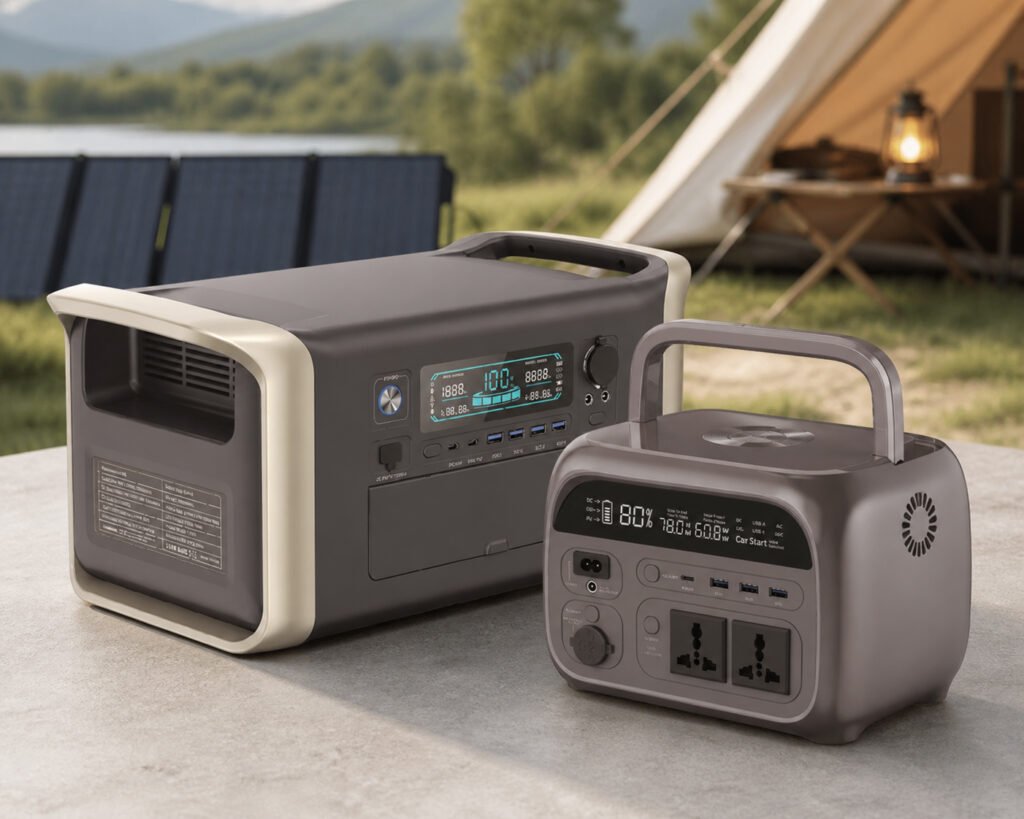
Catalog range
Portable AP / XP / Y series · plus 10 kWh all-in-one with 5 kW inverter
Who this platform serves
Portable power station brands
- Output port configuration
- Enclosure, colour, logo, packaging
- App and display options
Emergency and relief procurement
- Long shelf life at partial charge
- Rugged enclosure options
- Complete transport documentation
Retail and e-commerce channels
- Retail-ready packaging and manual
- Market-specific certification scope
- Volume and repeat supply planning
Watt-hour rating decides how your product can be shipped
| Decision | Taken early | Taken late |
|---|---|---|
| Watt-hour rating | Shipping route confirmed first | Route restricted after tooling |
| UN number and packing | Configuration matched to lane | Rebooking and delay |
| UN38.3 testing | Scheduled into the timeline | Launch slips by weeks |
| Enclosure tooling | Once | Twice |
| Market certification | Parallel with sampling | Blocks the listing |
Platforms specified for portable and emergency supply
AP / XP / Y portable series
- LiFePO4 chemistry throughout
- Configurable output ports
- Private-label enclosure and packaging
All-in-one 10 kWh system
- 10.0352 kWh capacity
- 5,000 W output
- 10 / 20 ms transfer, 1 – 9 parallel
FT-B sealed packs
- 12.8 V and 25.6 V, IP64
- 1.28 – 5.12 kWh
- ≥ 4,000 cycles
What to settle before tooling and before a launch date
Watt-hour rating against the shipping lane
UN38.3 testing is on the critical path
Output configuration is market-specific
Storage life and shelf state of charge
Certification scope for the listing
Branding depth versus lead time
Matching capacity to the use case
| Use case | Typical energy need | Capacity band |
|---|---|---|
| Phone, laptop, lights — day trip | 0.1 – 0.3 kWh | 0.3 – 0.5 kWh |
| Camping weekend, small cooler | 0.5 – 1.0 kWh | 1.0 kWh |
| Short outage — fridge and networking | 1.0 – 2.0 kWh | 2.0 kWh |
| Extended outage — fridge, lights, medical device | 2.5 – 5.0 kWh | 3.0 – 5.0 kWh |
| Mobile trade or field work with power tools | 1.5 – 3.0 kWh | 2.0 – 3.0 kWh with high peak output |
| Whole-home emergency backup | 8 – 15 kWh | All-in-one 10 kWh system |
Transport and market access for portable products
- UN38.3 Test Summary naming the final configuration
- SDS in the destination language
- Correct UN number and packing instruction for the configuration
- Dangerous goods packaging documentation for sea freight
- CE Declaration of Conformity for EU placement
- Market-specific electrical safety and EMC evidence for retail listing
What can be configured for a private-label portable line
- Capacity, cell configuration and BMS thresholds
- AC socket type, DC and USB port configuration
- Inverter output power and waveform
- Enclosure colour, finish, logo and screen printing
- Display, app and monitoring options
- Retail packaging, manual, quick-start guide and carton design
Technical and purchasing questions
Lithium transport rules are structured around watt-hour ratings and packing configurations. Crossing a threshold can change the packing instruction, restrict the shipping mode and add documentation. Decide the target markets and shipping lanes first, then set capacity.
It must name the final configuration, so it belongs alongside sampling rather than after it. Any design change after testing means testing again. Build it into the schedule from the start — this is the single most common cause of a slipped launch in this category.
Logo, colour, screen printing, packaging and manual are straightforward. A custom enclosure requires tooling, which has its own lead time and cost. Tell us how far the private label needs to go and we will quote both scope and schedule together.
At a partial state of charge in a cool, dry place, with a maintenance charge at a defined interval. We supply the recommended values for the specific platform, and they should be printed in the manual rather than left to the end user to guess.
AC socket type, count and rating, DC outputs and USB port mix are all configurable, and they are market-specific. Confirm destination markets before the enclosure is tooled, because ports are a tooling decision rather than an assembly decision.
It depends on how deep the customisation goes. Label-and-packaging programmes start low; custom tooling requires volume to justify. Send the intended scope and annual forecast and we will quote MOQ, tooling and lead time together.